Understanding the Transformation: AI in DevOps Explained
AI in DevOps explained represents the integration of artificial intelligence and machine learning capabilities into traditional development and operations workflows, fundamentally transforming how organizations build, deploy, and maintain software systems. The role of AI in software delivery has evolved from experimental automation to mission-critical infrastructure that drives competitive advantage.
Modern businesses face mounting pressure to deliver software faster while controlling costs and maintaining quality. Traditional DevOps practices, while revolutionary a decade ago, now struggle with the complexity and scale demanded by cloud-native architectures. This is where AI in DevOps and CI/CD pipeline optimization become transformative—machine learning algorithms can analyze thousands of deployment patterns, predict failures before they occur, and automatically optimize resource allocation across development lifecycles. By integrating AI in DevOps, organizations gain predictive insights, enhance automation, and accelerate software delivery without compromising reliability or performance.
According to recent industry analysis, organizations implementing DevOps automation with machine learning report up to 40% reduction in operational costs and 3x faster deployment frequencies. These aren't marginal improvements—they represent fundamental shifts in how software reaches production.
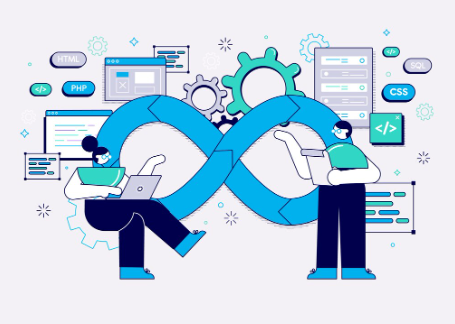
The Strategic Role of AI in Software Delivery
The role of AI in software delivery extends far beyond simple automation. Intelligent systems now handle complex decision-making across the entire application lifecycle, from code commit to production monitoring.
Key Areas Where AI Drives Value:
Predictive Quality Assurance: Predictive analytics in DevOps enables teams to identify potential bugs and performance bottlenecks before code reaches production. Machine learning models trained on historical deployment data can flag risky changes with remarkable accuracy, reducing rollback rates by up to 60%.
Intelligent Resource Management: Cloud DevOps + AI integration allows dynamic scaling based on predicted demand rather than reactive thresholds. AI systems analyze usage patterns, seasonal trends, and business events to optimize infrastructure costs automatically—one financial services firm reduced their AWS spending by $2.3 million annually through AI-driven resource optimization.
Automated Incident Response: When issues occur in production, AI for deployment automation and monitoring can detect anomalies, correlate logs across distributed systems, and even implement automated remediation before human operators become aware of problems.
AIOps vs DevOps Differences: Understanding the Evolution
Many organizations ask about AIOps vs DevOps differences when planning their automation strategy. DevOps represents cultural practices and workflows that unite development and operations teams. AIOps—Artificial Intelligence for IT Operations—specifically applies machine learning and analytics to operations data for autonomous management.
Think of DevOps as the foundation and AIOps as the intelligence layer that makes DevOps infinitely more capable. Benefits of AI in application lifecycle management include automated root cause analysis, intelligent alert correlation, and self-healing systems that traditional DevOps practices cannot achieve at scale.
The rise of autonomous DevOps with AI doesn't eliminate human expertise—it amplifies it. Engineers shift from routine operational tasks to strategic optimization and innovation, while AI handles repetitive analysis and execution.
Cost Reduction Through Intelligent Automation
The cost of AI-driven DevOps transformation varies significantly based on organizational size and existing infrastructure, typically ranging from $150,000 to $500,000 for mid-sized enterprises implementing comprehensive solutions. However, ROI often appears within 6-12 months through multiple cost-saving mechanisms.
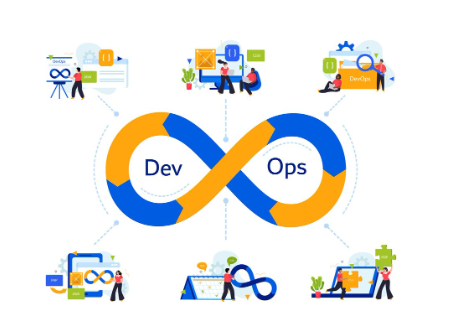
Primary Cost Reduction Strategies:
Optimized Cloud Spending: Machine learning models in CI/CD workflows continuously analyze resource utilization and automatically rightsize infrastructure. Organizations frequently discover they're over-provisioned by 30-50% when AI begins managing cloud resources.
Reduced Manual Effort: Generative AI for DevOps productivity automates documentation, generates test cases, and creates infrastructure-as-code templates. Development teams report saving 15-20 hours per sprint on routine tasks that AI now handles autonomously.
Faster Issue Resolution: When production incidents occur, every minute of downtime costs money. AI-powered monitoring reduces mean time to resolution (MTTR) by 70% through instant pattern recognition and automated diagnostics.
Scaling Operations with AI-Enhanced DevOps Pipelines
AI-enhanced DevOps pipelines enable businesses to scale operations without proportional increases in team size or operational complexity. A logistics company supporting 50 microservices can expand to 500 services without hiring additional DevOps engineers when AI manages orchestration, monitoring, and optimization.
AI for CI/CD pipeline optimization automatically determines optimal build sequences, parallelizes testing workflows, and selects deployment strategies based on risk assessment. These intelligent systems learn from each deployment, continuously improving decision-making accuracy.
For organizations seeking expertise, partnering with an AI DevOps automation company in USA or engaging AI DevOps consulting services accelerates implementation while avoiding common pitfalls. Whether you need iOS AI DevOps consulting services for mobile-first strategies or Android AI DevOps consulting services for cross-platform optimization, specialized consultants bring proven frameworks and battle-tested approaches.
Real-World Implementation: Getting Started
Organizations considering whether to hire AI DevOps consulting should evaluate their current pain points: Are deployments taking too long? Is your team overwhelmed by incident management? Are cloud costs spiraling beyond budgets?
Implementation Roadmap:
Assessment Phase: Audit existing DevOps workflows to identify automation opportunities and bottlenecks where AI can deliver immediate value
Pilot Projects: Begin with AI for deployment automation and monitoring in non-critical environments to build confidence and demonstrate ROI
Integration: Connect AI systems with existing tools—most AI DevOps consulting company in USA providers offer integrations with Jenkins, GitLab, Kubernetes, and major cloud platforms
Scaling: Expand AI capabilities across additional pipelines and teams based on proven success metrics
Many organizations partner with an AI DevOps consulting company in USA for the initial 6-12 month implementation period before transitioning to internal management as teams develop AI operational expertise.
The Future of AI-Driven DevOps Pipelines by 2030
Looking toward the future of AI-driven DevOps pipelines by 2030, industry analysts predict fully autonomous software delivery systems capable of managing entire application lifecycles with minimal human intervention. How GenAI will redefine DevOps automation centers on natural language interfaces where engineers describe desired outcomes and AI systems generate, test, deploy, and monitor the complete solution.
Emerging Trends:
Autonomous Pipeline Generation: Generative AI will create optimized CI/CD pipelines by analyzing application requirements and automatically configuring tools, stages, and quality gates
Predictive Security: AI models will identify vulnerabilities during development and automatically implement fixes before code reaches production
Self-Optimizing Infrastructure: Cloud resources will continuously reconfigure based on AI predictions of usage patterns, performance requirements, and cost optimization opportunities
The convergence of generative AI for DevOps productivity with traditional automation creates unprecedented capabilities. Systems will not just execute predefined workflows—they'll actively design better processes and challenge engineering assumptions with data-driven recommendations.
Current State and Key Citations
Recent research from Gartner indicates that 40% of enterprises will implement AIOps platforms by 2025, up from less than 10% in 2023. According to Forrester's 2024 analysis, organizations using AI-enhanced DevOps report 3.5x faster deployment frequencies and 50% reduction in change failure rates compared to traditional approaches.
Industry benchmarking studies from McKinsey Digital demonstrate that predictive analytics in DevOps delivers measurable business value: companies implementing AI-driven deployment optimization achieve 35-40% reduction in infrastructure costs while simultaneously improving system reliability by 45%. The MIT Technology Review highlighted how cloud DevOps + AI integration enables dynamic resource allocation that adapts to demand patterns in real-time, eliminating both over-provisioning waste and performance bottlenecks.
Taking Action: Your Next Steps
Whether you're exploring initial automation opportunities or ready to hire AI DevOps consulting expertise for comprehensive transformation, the journey begins with understanding your specific business challenges and desired outcomes.
Immediate Actions to Consider:
Audit current deployment frequency, failure rates, and operational costs to establish baseline metrics
Identify 2-3 high-impact use cases where AI could deliver immediate value
Research AI DevOps consulting services providers with proven experience in your industry vertical
Calculate potential ROI using cost-per-deployment and infrastructure efficiency metrics
The competitive landscape increasingly favors organizations that embrace AI-enhanced DevOps pipelines. Companies that delay adoption risk falling behind competitors who leverage AI to ship features faster, operate more reliably, and scale more efficiently.
Conclusion: The Imperative for AI-Driven DevOps
The integration of artificial intelligence into DevOps practices represents one of the most significant technological shifts in software engineering. Organizations that strategically implement DevOps automation with machine learning gain substantial competitive advantages through reduced costs, accelerated delivery, and improved reliability.
As we approach 2030, the question isn't whether to adopt AI for CI/CD pipeline optimization—it's how quickly you can implement these capabilities before market dynamics make them mandatory for competitiveness. The businesses thriving in tomorrow's digital economy will be those that embraced the rise of autonomous DevOps with AI today, transforming their development and operations workflows from manual processes into intelligent, self-optimizing systems.
Ready to transform your DevOps capabilities? Connect with experienced AI DevOps consulting services providers to assess your readiness, design your implementation roadmap, and begin capturing the substantial benefits that artificial intelligence brings to modern software delivery.
- #ai-appai-app
- #aiindevops
- #devops-aiindevops-cloudcomputing-cicd-kubernetes-docker-devsecops-automation-monitoring-machinelearning-mlops-aiautomation-infrastructureascode-gitops
- #ai-in-devops
- #role-of-ai-in-devops
- #devops-terraform-azureopenai-infrastructureascode-aiindevops-cloudautomation-pythondev-azurepipelines-iacvalidation-opensourcetools-aidrivendevelopment-cloudengineering-cicdautomation-devsecops-githubprojects
- #devops
- #devops-articles
- #devops-trends
- #ai-app-development
- #ai-app-development-company
- #app-development
- #ios-app-development
- #android-app-development
- #devops-journey
About the author
Hyena Information Technologies, founded in 1999, specializes in software development and consulting, focusing on mobile applications, AI, and IoT solutions for diverse clients.
Comments
Join the discussionNo comments yet. Be the first to comment.
